What is the Cascadia Subduction Zone?
The Cascadia Subduction Zone is a massive, slipping tectonic boundary lying just offshore the Pacific Northwest — stretching from northern California up through Oregon, Washington, and into southern British Columbia. USGS+2USGS+2
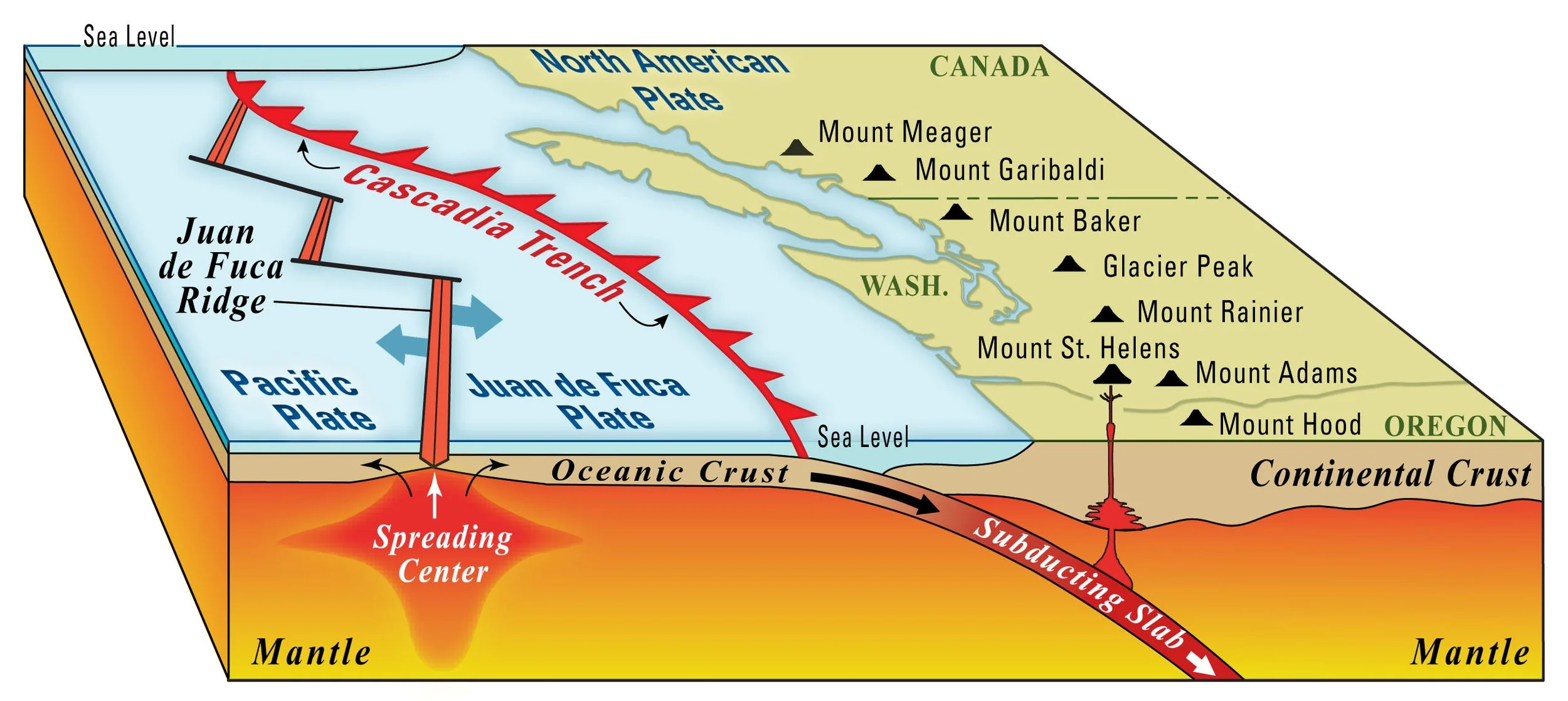
Here’s how it works: under the ocean the dense oceanic plate (the Juan de Fuca Plate — along with related smaller plates) slowly slides (“subducts”) beneath the continental North American Plate. Over decades or centuries, this process builds up enormous stress. When that stress finally releases — often all at once — the result can be a megathrust earthquake. Wikipedia+2USGS+2
That zone of plate contact is “locked” — meaning the plates aren’t sliding smoothly; instead they accumulate strain. Over time the strain grows until seismic failure (a big quake) becomes inevitable. Wikipedia+2Earth and Space Sciences+2
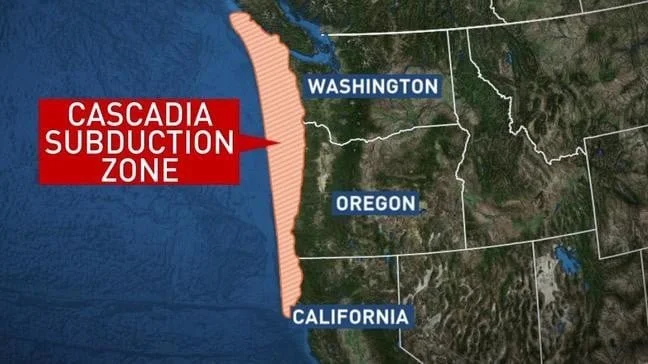
How Often Does It “Go Off”? — History & Risk
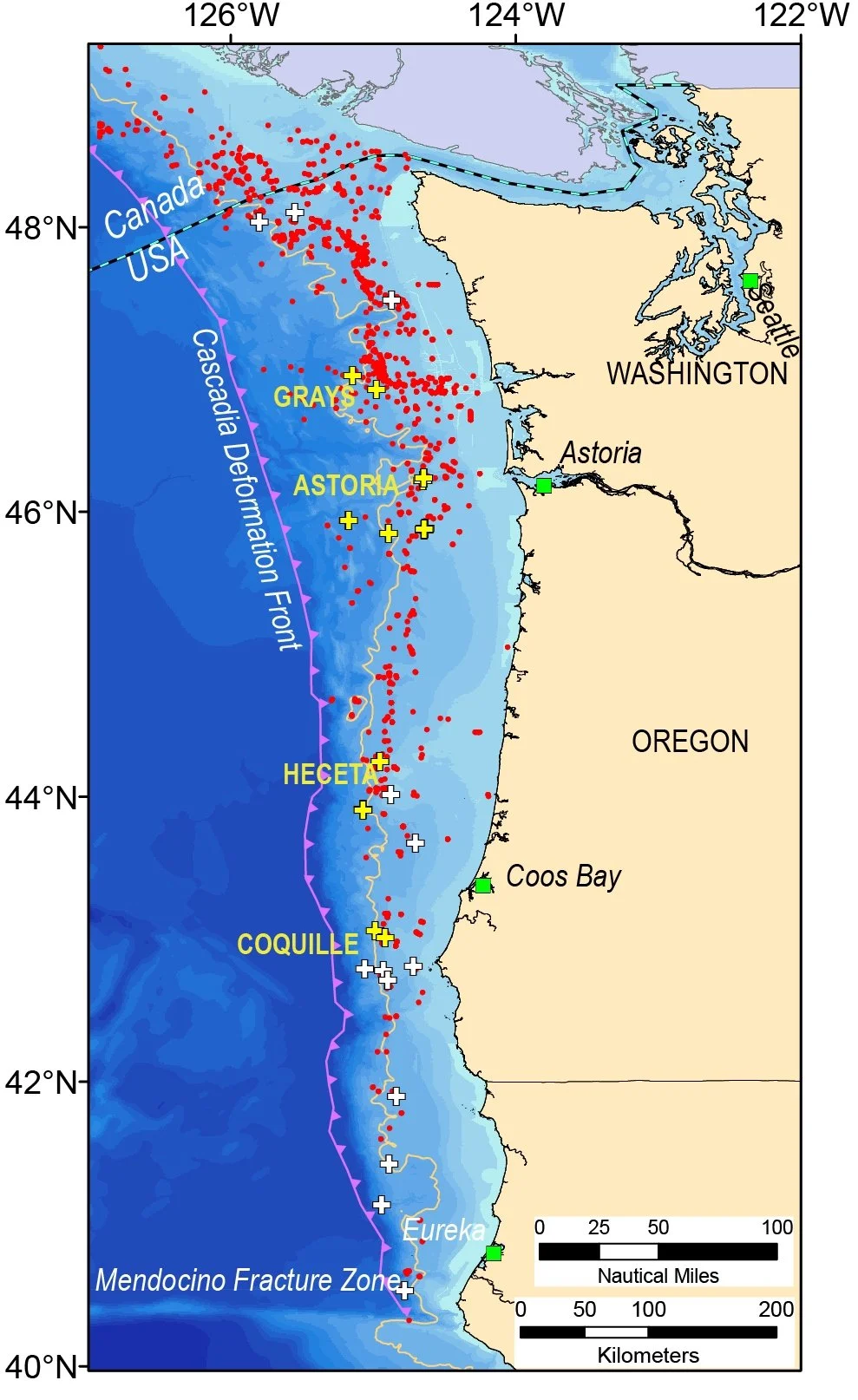
Geological studies and seafloor-sediment records show that over the past 10,000 years the Cascadia Subduction Zone has produced at least 19 major megathrust earthquakes. USGS+2USGS+2
The most recent one struck on January 26, 1700 — a quake strong enough (estimated around magnitude 9.0) to cause landslides, coastline sinking, and a massive tsunami that traveled across the Pacific and struck Japan. Oregon+2USGS+2
Because more than 300 years have passed since then, scientists consider the zone “overdue.” Current estimates suggest there is around a 37% chance of a powerful megathrust earthquake (magnitude 8.0 or greater) occurring in the Cascadia region within the next 50 years. Surviving Cascadia+2Washington County, OR+2
Given how much time has passed — and how much stress has likely built up — many experts warn that a “Big One” could strike at almost any time. Lamont-Doherty Earth Observatory+2National Association of Counties+2
What Could Happen — Worst-Case (and Likely) Scenarios
If the Cascadia fault ruptures fully:
Strong ground shaking could last several minutes — enough to cause widespread structural damage. Surviving Cascadia+1
Coastal land could drop several feet (subsidence) almost instantly, dramatically changing shorelines. USGS+1
A massive tsunami could strike coastal communities, potentially with waves tens of feet high — threatening lives, property, and infrastructure. Oregon+2USGS+2
Ports, bridges, roads, water systems, electricity, communications — much of the region’s infrastructure could suffer severe damage or be out of service. Surviving Cascadia+2USGS+2
Inland effects too: shaking and potential secondary disasters (landslides, liquefaction, disruption to services) could affect a much broader area. U.S. Geological Survey Publications+1
In short — a full Cascadia megathrust event could be one of the most destructive natural disasters in U.S. history. USGS+2National Association of Counties+2
Why This Should Matter — Even If You’re Not on the Coast
Even people who don’t live right on the shoreline could be affected. The Pacific Northwest is interconnected: food, utilities, transportation, commerce — all depend on coastal ports, power grids, and supply chains. Disruption in one part of the region can ripple statewide or beyond.
Also, many of the urban areas, critical infrastructure, and populations are concentrated near or tied to coastal or fault-adjacent zones — so the stakes are high for disaster preparedness, not only for individuals, but for communities, government agencies, and local economies.
What You Should Do — Preparing for Cascadia
Because earthquakes — especially from the Cascadia fault — are unpredictable, readiness is the best defense. Even simple preparation can save lives and reduce chaos. Key steps to consider:
Have an emergency kit: water, non-perishable food, flashlight, batteries, first aid, medications — enough for at least several days.
Make a family plan: know evacuation routes (especially if you’re near the coast), decide on rally points, and have a communication strategy.
Secure your home: fasten heavy furniture, secure water heaters, know how to turn off gas or electricity if needed.
Prepare for infrastructure disruption: assume power, water, internet, and gas could be out for a while; maintain backup supplies, cash, alternative light/heat sources, a hand-crank or battery radio.
Stay informed: follow updates from geological and emergency management agencies about earthquake risk, tsunami warnings, and readiness — don’t wait until it’s too late.
Conclusion: Awareness Today = Safety Tomorrow
The Cascadia Subduction Zone isn’t a distant possibility — it’s a very real ** ticking time bomb** under the Pacific Northwest. The geological record makes clear that “the Big One” will happen. There’s no predicting exactly when — but all signs point to sometime within coming decades.
Understanding the risk, knowing what could happen, and preparing ahead isn’t about paranoia. It’s about common sense, responsibility, and protecting lives.
If you live, work, or visit anywhere in the Pacific Northwest — take a few simple steps now. Because when the plates finally move, preparedness might be the difference between chaos and calm.
More information:
https://youtu.be/rIxKBsGN5_k?si=knyDNIWoi17RkoGb
https://youtu.be/rIxKBsGN5_k?si=knyDNIWoi17RkoGb. https://survivingcascadia.com/ https://www.pbs.org/video/the-cascadia-earthquake-americas-worst-disaster-kwlarv/https://www.usgs.gov/special-topics/subduction-zone-science/science/cascadia