When the Sun Sneezes: Why Solar Storms Matter to You
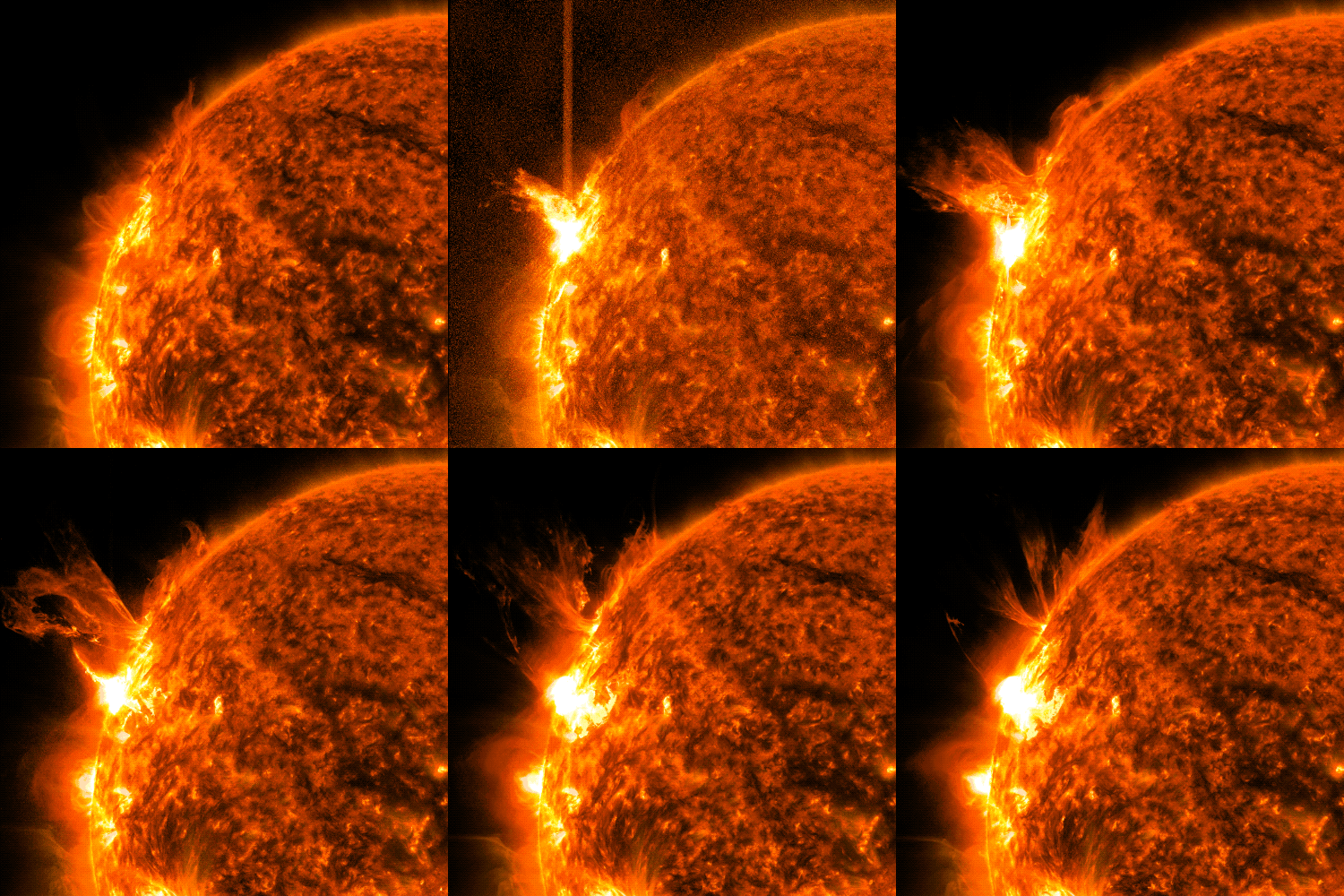
Solar flares and geomagnetic storms may sound like “space stuff” that only scientists care about. But as our world becomes more dependent on electricity, satellites, and the internet, what happens on the Sun can ripple into our everyday lives here on Earth.
What Is Space Weather?
Just like Earth has weather in the atmosphere, the Sun creates “space weather” in the form of powerful bursts of energy and particles. Two important terms to know:
Solar flares – Sudden, intense flashes of radiation from the Sun’s surface, like massive explosions of energy.
Coronal mass ejections (CMEs) – Huge clouds of charged particles and magnetic fields launched into space. When directed at Earth, they can disturb our planet’s magnetic field.
When a CME reaches Earth and interacts strongly with our magnetic field, it can cause a geomagnetic storm, which can affect power lines, satellites, communications, and navigation.
Recent Solar Activity: Why People Are Paying Attention
The Sun operates on an 11-year cycle, moving between quieter and more active phases. We are currently near the active phase—solar maximum. This means:
More sunspots
More solar flares
More CMEs
Higher chances of geomagnetic storms
In late 2025, NASA reported a strong X-class flare—a powerful reminder that space weather is active right now. These events are closely monitored by agencies like:
NOAA Space Weather Prediction Center
NASA Solar Cycle 25 Blog
USGS (for effects on society and infrastructure)
Why Solar Storms Matter Here on Earth
Earth’s atmosphere protects us from harmful radiation, so solar storms don’t typically pose a direct physical danger to humans.
The issue is technology. Geomagnetic storms can interfere with the systems modern life depends on.
Possible effects include:
Power grid disruptions: Extra currents in long power lines can stress transformers or cause outages.
Satellite problems: Damaged or disturbed satellites can affect weather data, TV, internet, and GPS.
Navigation issues: GPS may become inaccurate temporarily.
Communication blackouts: HF radio used by aircraft and ships can be disrupted.
Service disruptions: Banking, fuel pumps, internet, and some medical services may be impacted.
On the bright side, geomagnetic storms can create beautiful auroras visible much farther from the poles than usual.
What History Teaches Us
Past geomagnetic storms have created:
Sparking or failed telegraph lines (1800s)
Power grid damage in the 20th century
Communication and satellite issues in recent decades
Extreme storms are rare, but because modern systems are highly interconnected, understanding and preparing for these events is wise.
How to Prepare for Solar Flares and Geomagnetic Storms
You can’t stop a solar storm, but you can greatly reduce how much it disrupts your daily life. Preparation is similar to planning for power outages.
1. Build a Basic Emergency Kit
Have at least 3 days of essentials:
Water (1 gallon per person per day)
Non-perishable food
Manual can opener
Flashlights, headlamps, batteries
First-aid kit and medications
Hygiene supplies
2. Plan for Power Outages
Keep a flashlight accessible.
Have a battery, solar, or hand-crank radio.
Use portable or solar chargers for phones.
Know how to open your garage manually.
3. Protect Your Information and Devices
Back up important files.
Keep printed copies of essential contact info.
Unplug sensitive electronics during major storm warnings.
4. Prepare for Communication Disruptions
Choose a family meeting place.
Designate an out-of-town contact.
Keep a corded landline phone if possible.
5. Keep Vehicles and Essentials Ready
Keep your gas tank at least half full.
Carry some cash for backup.
Store water, snacks, and a blanket in your car.
What to Expect During a Strong Solar Storm
You may notice:
Alerts from NOAA, NASA, or local emergency agencies
GPS delays or inaccuracies
Satellite or radio communication issues
Flickering lights or localized outages
Broader outages in severe cases
Most impacts are temporary. Preparation turns a chaotic situation into an inconvenience rather than a crisis.
How to Stay Informed
Reliable sources include:
NOAA Space Weather Prediction Center
NASA Solar Cycle 25 Blog
USGS: Geomagnetic Storm Impacts
Practical solar flare survival guides
Big Picture: Prepared, Not Panicked
Solar flares and geomagnetic storms don’t need to inspire fear. A small amount of knowledge and practical preparation go a long way.
Most people will only experience temporary disruptions. With basic supplies, backup plans, and a little awareness, you can stay safe, calm, and confident.
A little readiness today can keep you safer and more comfortable tomorrow — even when the Sun decides to “sneeze.”
Dec 2025 news: https://www.montanarightnow.com/national_news/scientists-warn-strong-solar-flare-could-disrupt-life-on-earth/article_1f858b8c-817e-591e-b492-a08723109dde.html